Lissa Siya Joseph arrived at the 2026 Tanzania National Chess Championship carrying something she had not possessed before Budapest: experience.
She already knew what it felt like to represent Tanzania at a Chess Olympiad. She understood the scale of the international arena, the unforgiving nature of each move and the preparation required to compete against players shaped by stronger chess systems. Budapest had given her an education, but it had not guaranteed her a return.
To reach Samarkand, she would have to earn her place again.
This qualification campaign felt different from the first. In 2024, Lissa had entered national competition as a relatively new player, uncertain about how far her self-taught ability could carry her. Finishing fifth and reaching the Olympiad had surprised even her. Two years later, she approached selection with clearer expectations and a deeper understanding of the pressure ahead.
“I was expecting it because I had been preparing,” she explains. “It was really tough, but I was still expecting to qualify.”
Expectation, however, offered no protection.
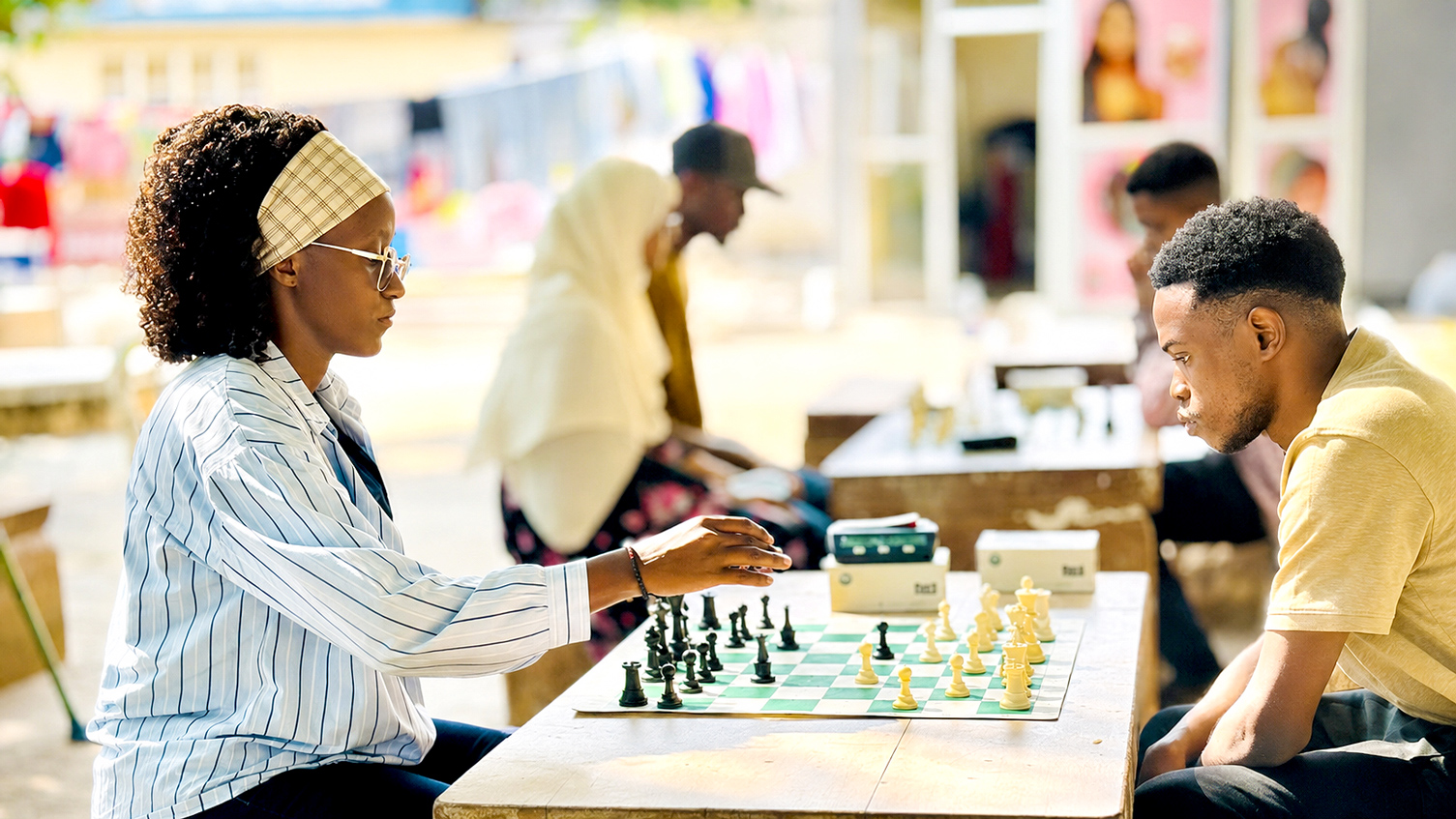
The 2026 national championship brought together 16 players in the women’s section for nine rounds of classical chess. Unlike a rapid tournament, where one difficult result can quickly be followed by another game, classical competition requires players to remain inside complex positions for hours. Each round tests preparation, calculation, patience and emotional endurance.
For Lissa, it was also a test of everything she had been trying to balance away from the board. She entered the championship while pursuing her bachelor’s degree and managing the competing demands of university work and chess preparation. The tension described in the previous chapter was no longer theoretical. It had followed her into a tournament where every half-point could determine whether she returned to the Olympiad.
She completed the nine rounds with six points.
The women’s championship was won by Anahi Shah with 7.5 points, followed by Neema Kisanga with seven and Bertha Mkude with 6.5. Lissa finished level on six points with Mariam Gwae. The margins separating the leading players were narrow, reflecting a national competition in which one recovered position, missed opportunity or carefully defended draw could influence the final standings.
The championship was described as record-breaking, with 40 players participating in the Open section and 16 in the women’s competition. Its significance extended beyond identifying national champions; it helped shape the teams that would represent Tanzania at the 46th FIDE Chess Olympiad in Samarkand. The Guardian reported that Lissa’s six-point performance secured her place among Tanzania’s returning Olympians.
For Lissa, qualification carried a meaning different from the wonder of her first selection.
Budapest had proved that she could reach the Olympiad. Samarkand offered an opportunity to show what she had learned since returning home.
The six points beside her name could summarise her tournament, but they could not explain it. They did not show the hours spent revisiting earlier games, the tactical exercises completed between academic responsibilities or the moments when she had to recover after making a poor decision. They could not show the emotional discipline required to begin each round without carrying the previous result onto the next board.
Chess standings compress human experience into numbers. Lissa’s six points represented nine separate battles, with her opponents, the positions before her and, at times, her own doubts.
That last contest may have been the most important.
Experience had not removed uncertainty from her chess. It had taught her how to continue in its presence. She no longer needed to feel completely confident before competing seriously. She needed to trust the preparation she had completed, calculate the position in front of her and resist allowing fear to make decisions on her behalf.
Her return also confirmed that the first qualification had not been an isolated breakthrough. She had gone from a self-taught online beginner to a first-time Olympian, then returned to national competition and earned another opportunity to carry Tanzania’s flag.
Yet Lissa does not speak as though qualification were the destination. Selection merely changes the question. The concern is no longer whether she will travel to Samarkand, but what kind of player will arrive there.
The answer is being constructed through preparation: analysing her Budapest games, studying tactical positions, improving her middlegame calculation and strengthening the mind responsible for every move.
Six points opened the door.
What Lissa does before walking through it may define her second Olympiad.
Next: Chapter Six — Training the Unseen Player


No comments yet. Be the first to share your thoughts.