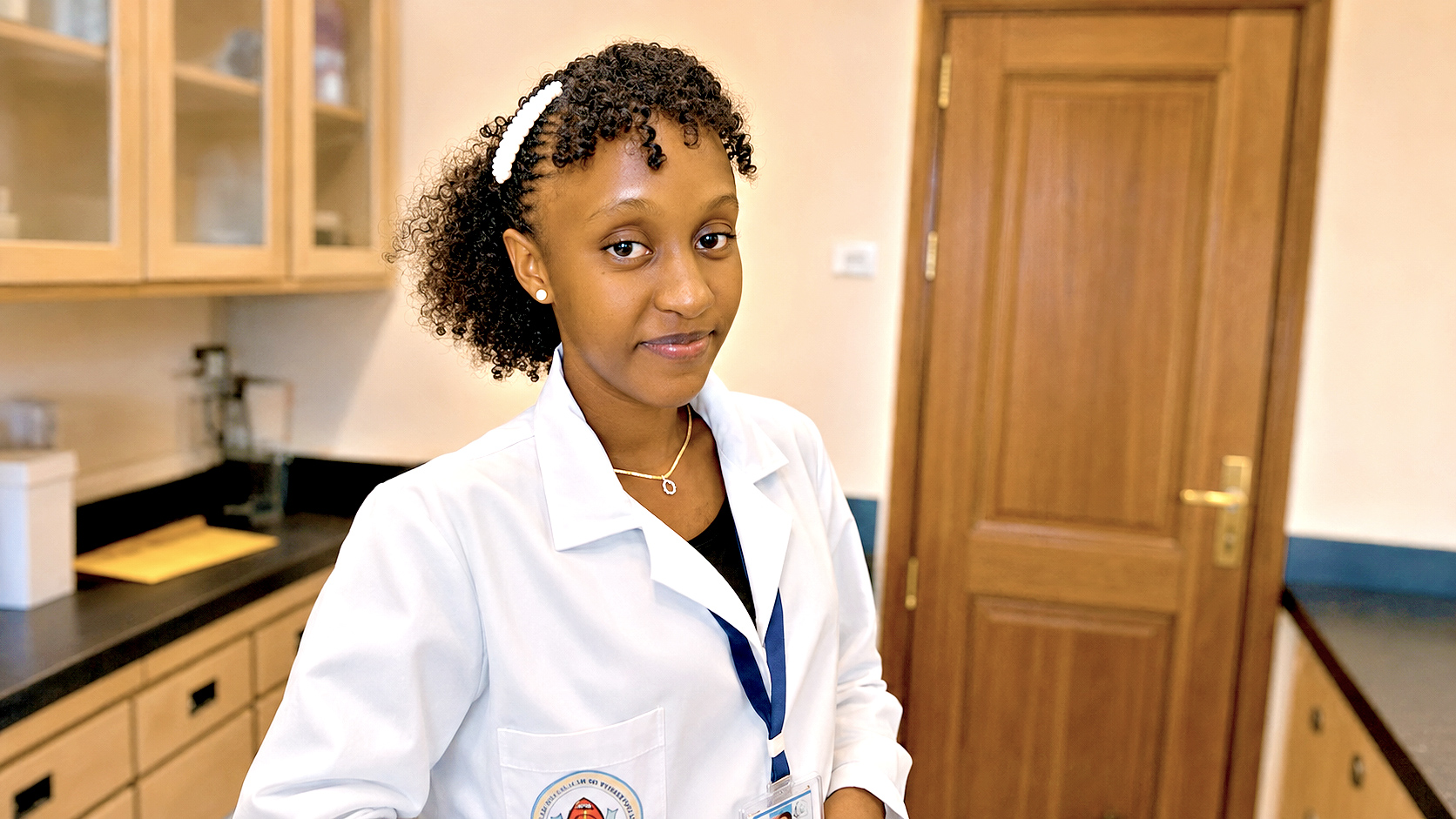
On some days, Lissa Siya Joseph studies what can be seen through a laboratory lens. On others, she examines positions unfolding across sixty-four squares.
Both worlds demand concentration. Both reward patience, accuracy and disciplined observation. In the laboratory, overlooking a small detail can affect an entire conclusion. On the chessboard, one unnoticed threat can change the direction of a game.
For Lissa, science and chess are not separate versions of her life. They are two expressions of the same curious mind.
She is pursuing a bachelor’s degree in laboratory medicine and medical sciences while developing her career as a competitive chess player. Either path would be demanding on its own. Together, they create a daily contest for her time, attention and energy.
University brings lectures, assignments, practical sessions and examinations. Chess demands training, game analysis, tournaments and the mental preparation required to compete under pressure. When important competitions approach, both responsibilities can begin asking for her full attention at the same time.
“The struggle I face is balancing my studies and chess preparation,” she explains. “It is very demanding.”
There is no perfect formula for maintaining that balance. Lissa has sometimes had to rearrange her academic commitments around tournaments and find additional time for preparation when her schedule was already full. Certain choices have been uncomfortable, particularly when chess and university responsibilities have collided.
Her explanation for how she continues is delivered with the kind of honesty that makes her laugh at herself.
“Obsession, I guess,” she says. “I am just obsessed with chess.”
She does not use the word casually. Chess occupies her thoughts beyond formal training sessions. Positions remain in her mind after games have ended. Mistakes invite further investigation, while a difficult tactical idea can hold her attention until she understands it. What began as an alternative to social media has become one of the organising forces of her life.
Yet her commitment to chess does not mean that her education has become unimportant. Lissa wants to continue progressing in both fields. Her ambition is not to abandon science for the chessboard or treat chess as a distraction from her professional future. She is interested in discovering how the habits developed through one discipline can strengthen her performance in the other.
Chess has taught her to remain patient when the solution is not immediately visible. It has trained her to examine several possibilities before committing to a decision and to recover when an earlier assumption proves incorrect. These habits also belong in science, where curiosity must be supported by evidence and conclusions must survive careful testing.
“Chess has really helped me in my career,” she says. “My vision is to pursue my science studies and also continue with my chess career.”
At university, Lissa established a chess club, creating a practical bridge between the two parts of her life. The club allows her to remain active in the game without waiting for national tournaments or travelling away from campus. It also gives other students an opportunity to encounter chess in an environment where they already learn, work and build friendships.
The initiative reveals another side of her character. Lissa is not interested only in becoming a stronger player herself. Teaching is one of her hidden talents, and she has already helped others learn the game, including girls who may otherwise have struggled to see chess as a space where they belong.
In teaching, she must return to the beginning: how each piece moves, how a position is understood and how confidence develops gradually. The process reminds her of the online learner she once was, discovering the game without a coach and trying to transfer what she saw on a screen onto a physical board.
Her students may see an Olympian guiding them. Lissa still sees someone learning.
That humility matters because neither science nor chess allows a person to remain comfortable for long. A new laboratory problem can challenge what seemed familiar. A stronger opponent can expose weaknesses that previous games did not reveal. Progress in both fields depends on accepting that competence is never the same as completion.
As Samarkand approaches, the pressure of balancing these worlds becomes sharper. Lissa must continue with her degree while preparing to face experienced international opponents. Training cannot simply happen when she feels inspired; it must be built into an already demanding life.
The struggle behind her selection will never appear beside her name on the tournament standings. The results will show wins, draws, losses and points. They will not show the lectures negotiated around preparation, the hours spent analysing games after academic work or the mental exhaustion of trying to honour two ambitions at once.
Lissa accepts that tension because she does not believe she must choose between becoming a scientist and becoming a stronger chess player.
In both worlds, she is learning to look beneath the surface.
In both, the smallest detail can change everything.
Next: Chapter Five — Six Points and a Ticket to Samarkand


No comments yet. Be the first to share your thoughts.