

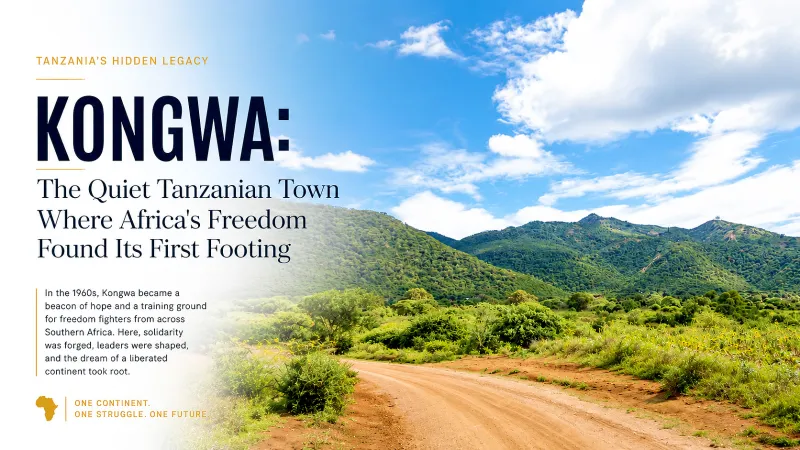
KONGWA, Tanzania — The road into Kongwa winds through rolling plains where farmers tend maize and sunflower fields, cattle graze beneath sprawling acacia trees, and life moves with the steady rhythm of rural Tanzania.
To most visitors, it is an ordinary town.
But history often hides in ordinary places.
Few would imagine that these peaceful landscapes once echoed with marching feet, whispered strategy sessions and conversations that would help redraw the political map of Africa. Long before many nations celebrated independence, Kongwa became one of the continent's earliest crucibles of liberation, a place where the dream of a free Africa began to take organised form.
In the early 1960s, as colonial rule still gripped much of Southern Africa, young men and women arrived here from hundreds, sometimes thousands, of kilometres away. They came from Mozambique, South Africa, Namibia, Zimbabwe and beyond, carrying little more than determination and the belief that freedom was worth any sacrifice.
Kongwa Camp became their home.
Here they trained. They studied. They debated. They prepared not simply for war, but for nation-building.
Some learned military discipline. Others immersed themselves in political education, leadership and organisation. Together they forged relationships that would outlast the struggles themselves, creating bonds between liberation movements that crossed colonial borders and ethnic divisions.
At the heart of this story stood Tanzania.
Fresh from Tanganyika's own independence in 1961, President Julius Kambarage Nyerere rejected the notion that liberation could stop at national borders. To him, independence carried a moral responsibility. Tanzania could not consider itself truly free while neighbouring nations remained under colonial domination or apartheid.
That conviction became one of the defining principles of Tanzanian foreign policy.
Rather than turning inward to focus solely on its own development challenges, the young nation opened its doors to liberation movements across Southern Africa. It offered sanctuary, diplomatic recognition, land, training facilities and political support at a time when doing so carried considerable economic and international risks.
Kongwa became one of the first places where that vision moved from principle to practice.
Within the camp, future members of Mozambique's FRELIMO, South Africa's African National Congress (ANC), Namibia's SWAPO and Zimbabwe's liberation movements lived side by side. They exchanged experiences, refined strategies and imagined a continent governed by its own people rather than distant colonial powers.
Many of those young recruits would later become presidents, cabinet ministers, military commanders and architects of newly independent states.
Long before they led nations, they shared classrooms, barracks and meals in Kongwa.
The camp therefore became more than a military installation. It evolved into a living classroom of Pan-Africanism.
It demonstrated that Africa's liberation would not be achieved through isolated national struggles but through solidarity that transcended borders. The friendships and alliances built here strengthened liberation movements across the region and reinforced the idea that the freedom of one nation depended upon the freedom of its neighbours.
As Tanzania's role expanded, Dar es Salaam emerged as the diplomatic capital of African liberation, while the Organisation of African Unity's Liberation Committee coordinated continental support for anti-colonial movements. Kongwa formed one of the earliest foundations upon which that wider liberation infrastructure was built.
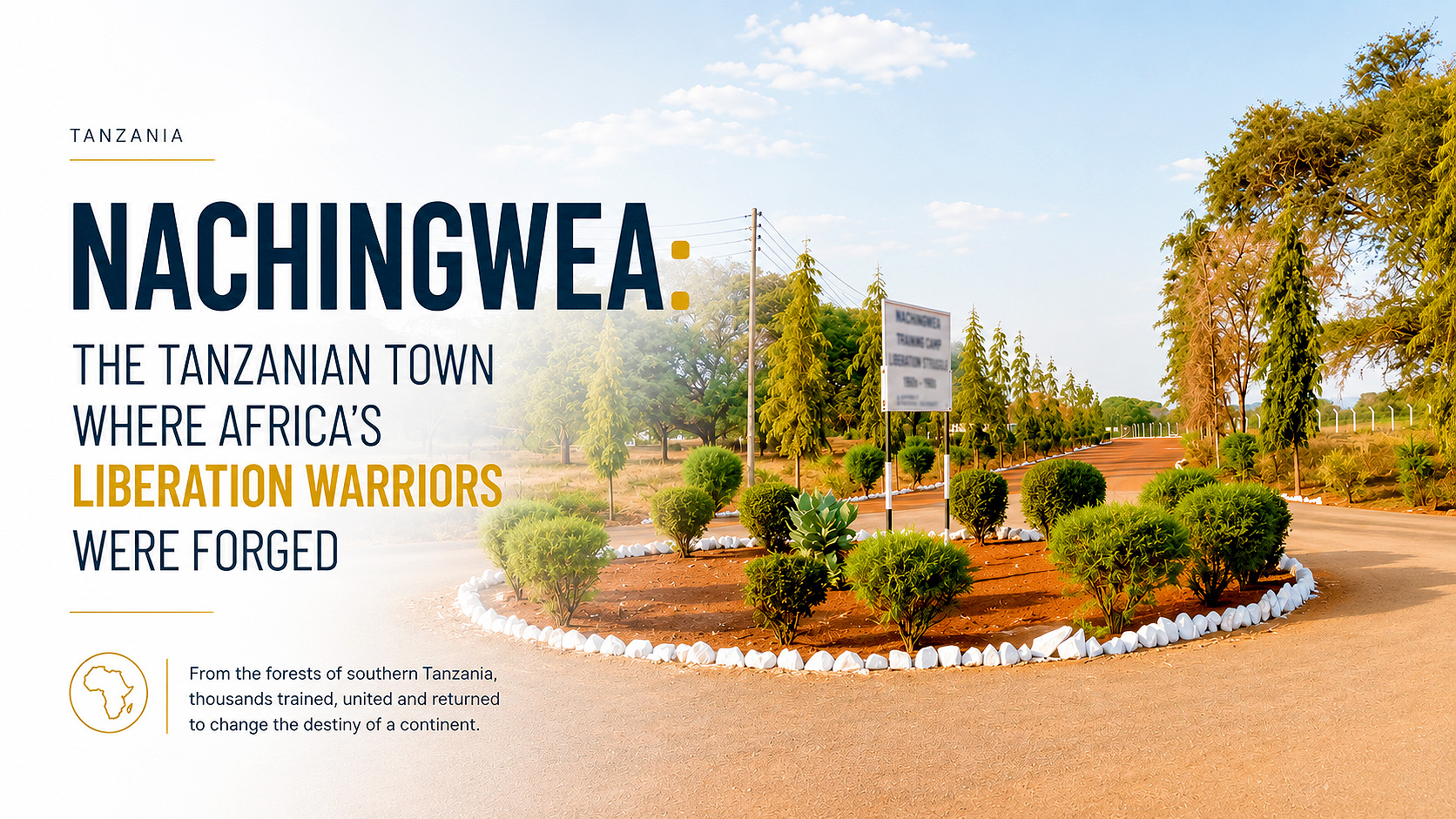
In later years, larger and more specialised training centres such as Nachingwea and Mazimbu would assume greater operational importance. Yet Kongwa retains a unique place in history because it represents where Tanzania's liberation mission first took tangible shape.
Today, little remains of the original camp.
Nature has reclaimed much of the landscape. Buildings have disappeared. New generations pass through Kongwa with little indication that some of Africa's most consequential political journeys began here.
Yet absence does not diminish significance.
Across the continent, historians increasingly recognise Kongwa as a place worthy of preservation, not merely for Tanzania, but for Africa itself. Its story belongs equally to Mozambicans, Namibians, Zimbabweans, South Africans and countless others whose independence was shaped, in part, by what happened in this quiet corner of central Tanzania.
Protecting Kongwa is about far more than conserving old structures.
It is about preserving the memory of a generation that believed freedom demanded shared sacrifice. It is about reminding future Africans that continental unity was not born in conference halls, but in camps where strangers became comrades united by a common cause.
As the African Union advances regional integration and the African Continental Free Trade Area seeks to deepen economic cooperation, Kongwa offers a powerful historical lesson. Long before Africa pursued shared markets and common institutions, it pursued a shared destiny.
The first bridges between nations were built through solidarity.
The quiet fields of Kongwa still sway beneath the Tanzanian sun, giving little hint of the history beneath them.
Yet for those who pause to listen, they tell an extraordinary story, a story of courage, conviction and a generation that dared to imagine a liberated Africa, then set out to make that vision a reality.
Updated October 15, 2026


Be the first to share your thoughts.